
Often I’m asked where can I find your sermons online?
/I made a YouTube playlist of my preaching.
Click the above link to view over 300 sermons of my preaching.
I made a YouTube playlist of my preaching.
Click the above link to view over 300 sermons of my preaching.
I made a YouTube playlist of my preaching.
Click the above link to view over 300 sermons of my preaching.
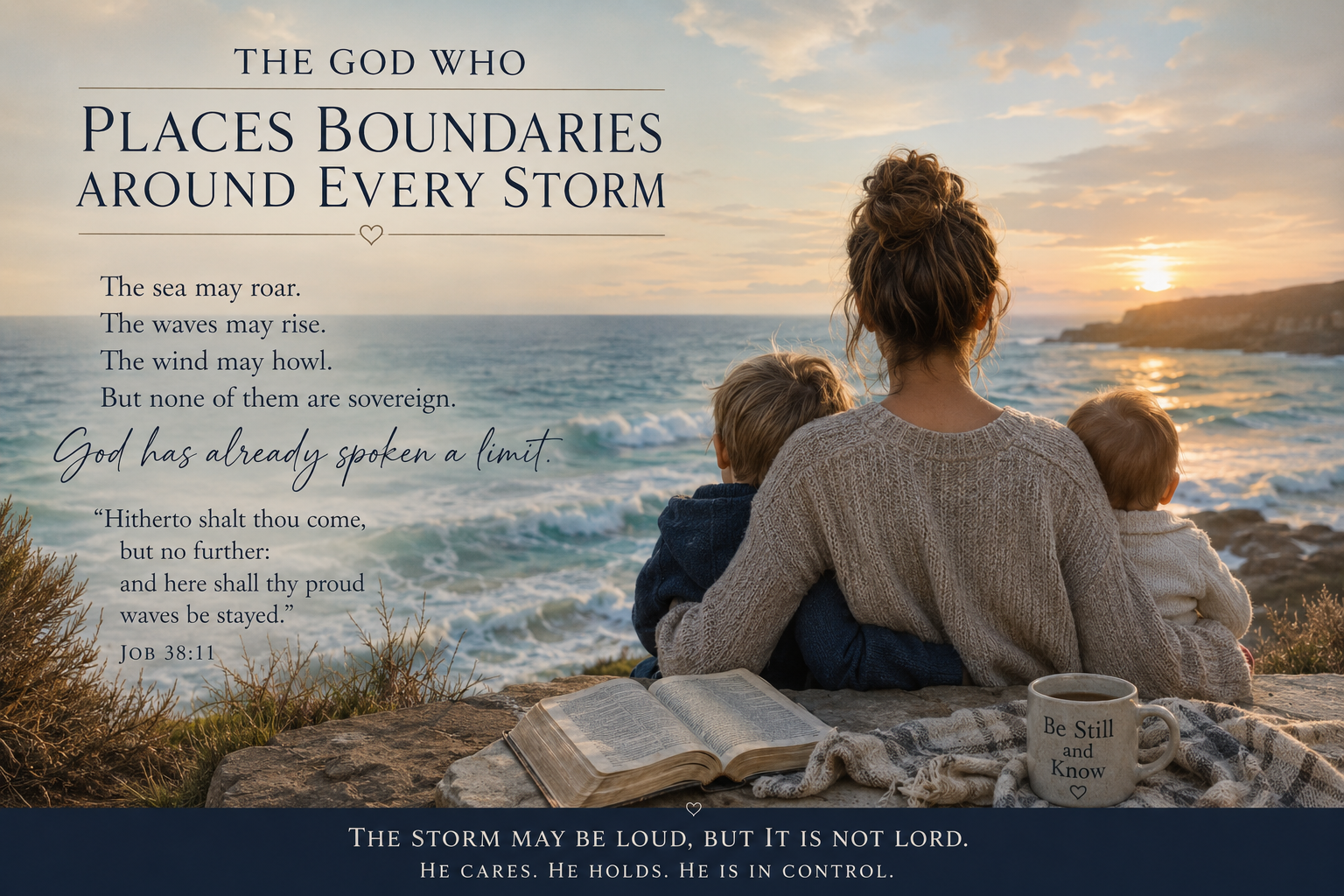
I love the closing chapters of Job. In fact, I am writing a book called, How Big is Your God? The idea of the book is to see how big our God is so we can remind ourselves when storms come.
In these closing chapters of Job, I watch as God stands beside a suffering man, and I listen as God gently lifts Job’s eyes from the ashes to the Almighty. Job wanted answers. God gave him something better. God gave him a larger view of Himself.
I am lingering over another part of God’s conversation with Job.
It is a passage about the sea.
At first glance, it seems like an unusual place for God to begin comforting a hurting man. Yet the longer I sat with it, the more I realized God was speaking directly to one of the deepest fears of the human heart.
The fear that something will become bigger than we can handle.
The fear that the storm will not stop.
The fear that the waves will keep rising.
The fear that what we love most will not be safe.
Listen to the words God spoke:
“Or who shut up the sea with doors, when it brake forth, as if it had issued out of the womb?” (Job 38:8)
Then He continues:
“When I made the cloud the garment thereof, and thick darkness a swaddlingband for it… And said, Hitherto shalt thou come, but no further: and here shall thy proud waves be stayed.” (Job 38:9,11)
There is something beautiful here that I had never fully appreciated before.
Before God speaks about boundaries, He speaks about birth.
Before He speaks about the waves stopping, He speaks about the sea issuing forth from the womb.
Then He describes Himself clothing it and wrapping it in swaddling bands.
That is not the language we expect. The sea is powerful. The sea is overwhelming. The sea has swallowed ships and frightened sailors since the beginning of time.
Yet God describes it as something newly born.
Then He describes Himself wrapping it.
I cannot help but think God chose that picture because He knew there would one day be mothers reading these words.
You know what it means to swaddle a child.
You pulled the blanket snug around tiny shoulders when they were vulnerable. You held little ones close when they could not soothe themselves. You gave them boundaries that made them feel safe. You were not restricting them. You were caring for them. You were creating a place where they could rest.
That is the picture God gives Job.
The sea that overwhelms mankind does not overwhelm God.
The waves that frighten us do not frighten Him.
The storm that appears wild and untamable is something God wraps, clothes, and places within boundaries.
The ocean itself answers to Him.
Every mother knows what it feels like to stand beside a storm.
Not necessarily a storm of rain and wind, but the storms that enter ordinary life.
Sometimes the storm arrives through a diagnosis.
Sometimes it arrives through uncertainty.
Sometimes it arrives through grief.
Sometimes it arrives through fear.
Sometimes it arrives in the quiet hours of the night when everyone else is sleeping and a mother’s heart begins carrying burdens that belong to tomorrow.
You know something about those storms.
You may have faced physical limitations you never expected. You may carry grief that still visits when you least expect it. You may worry about the people you love most.
That is what love does.
When they hurt, you hurt. When they struggle, you feel it. When uncertainty touches their lives, it touches yours too.
You may watch someone you love walk regularly into difficult situations. You may carry quiet concern for their safety and well-being. You may find yourself praying for them in moments they will never know about.
Love always carries concern.
That is why this passage feels so comforting.
God does not merely tell Job that storms exist.
He tells Job that storms have boundaries.
The sea may roar.
The waves may rise.
The wind may howl.
But none of them are sovereign.
God has already spoken a limit over them.
“Hitherto shalt thou come, but no further.”
Imagine that.
The God who created the oceans stands at the shoreline and says, “No farther.”
The waves obey.
The tide obeys.
The sea obeys.
The storm obeys.
The disciples learned the same lesson on the Sea of Galilee. The storm was real. The wind was strong. The waves were frightening. Experienced fishermen believed they might die. These were not men prone to panic — yet they were panicking.
Then Jesus stood and spoke three simple words:
“Peace, be still.” (Mark 4:39)
The storm obeyed immediately. The waves recognized His voice. The wind recognized His authority. And every frightened mother can take the same lesson home — the storm that terrified those fishermen was no more sovereign than the storm pressing against your heart tonight.
Creation always recognizes its Creator.
One reason we become so fearful is because we spend so much time looking at the waves.
The waves are real.
The storm is real.
The uncertainty is real.
But they are not Lord.
The storm does not sit on the throne.
The diagnosis does not sit on the throne.
The fear does not sit on the throne.
The future does not sit on the throne.
God does.
That is what every mother needs to remember. Not because she lacks faith. Not because she has forgotten God. But because love naturally makes her attentive to danger.
A mother notices things.
She watches.
She plans.
She protects.
She prepares.
She quietly assumes responsibility for holding everything together.
But God never asked you to hold back the sea.
That job already belongs to Him.
You do not have to stand between your family and every storm. God already does. You do not have to carry the burden of controlling what you cannot control. God never assigned you that responsibility. You do not have to hold the shoreline in place with your own strength. God has never once asked you to do that.
The same God who swaddled the sea is holding your family.
He is holding the people you love.
He is holding the future you cannot see.
He is holding you.
The same God who wrapped the ocean in clouds and told the waves where they must stop has not forgotten how to care for His children.
The sweetest truth in this passage is not only that God controls the storm.
It is that God is not alarmed by it.
The storm may be large to you. It is not large to Him. The storm may feel unpredictable to you. It is not unpredictable to Him. The storm may seem powerful to you. It is not powerful compared to Him.
The sea that terrifies men is wrapped in swaddling clothes by God.
What overwhelms us rests comfortably in His hands.
So when fear whispers this week, remember the shoreline.
Remember the waves that could go no farther.
Remember the God who wrapped the sea before He restrained it.
Remember the God who cares before He commands.
Remember the God who holds what you cannot hold.
And remember that every storm has a shoreline because every storm answers to Him.
“And said, Hitherto shalt thou come, but no further: and here shall thy proud waves be stayed.” (Job 38:11)
The storm may be loud, but it is not Lord.
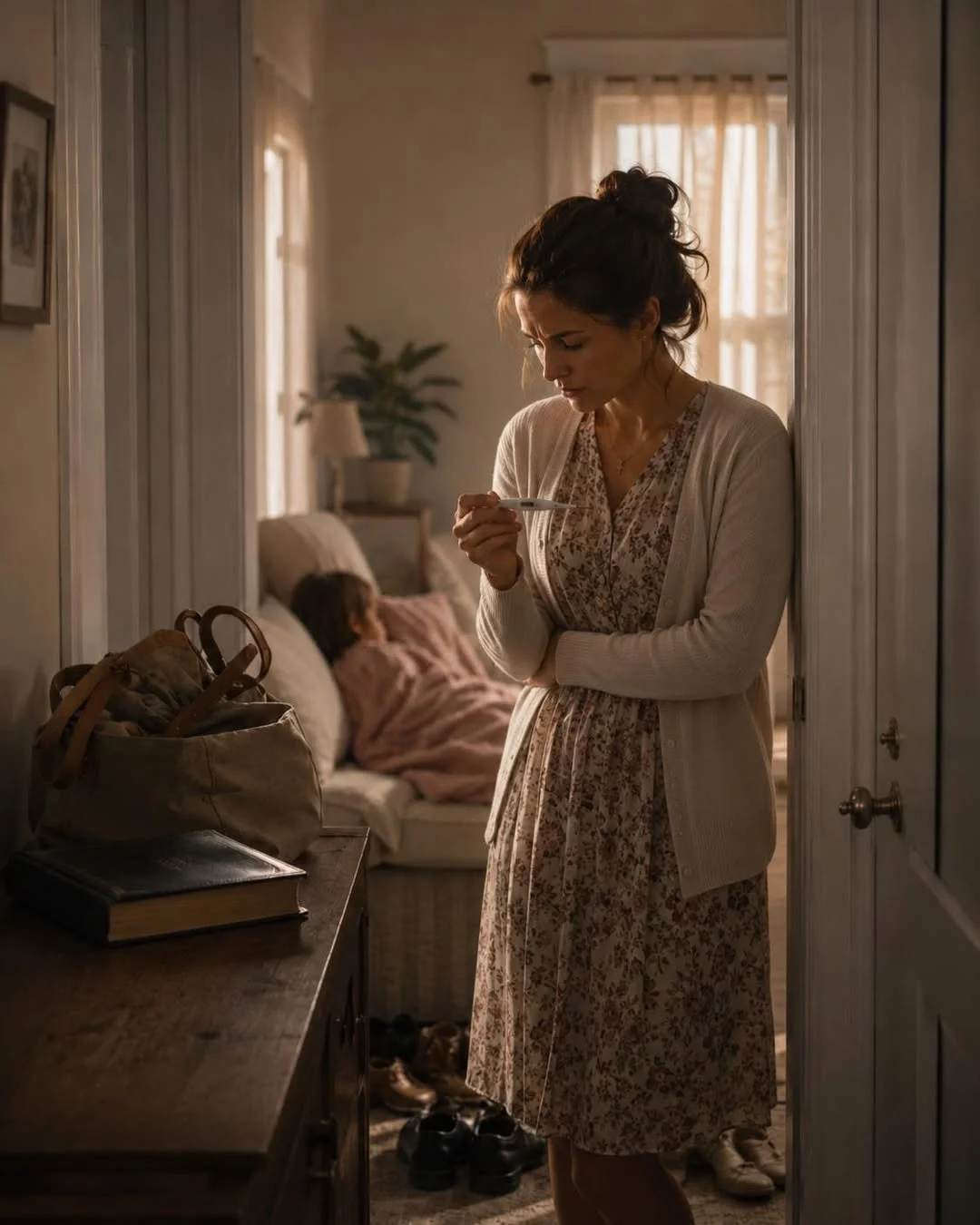
The photo is AI.
Have you noticed it? It is almost never a Tuesday. It is Sunday morning. The shoes are by the door. The Bible is on the table. The family is almost ready.
And then it happens.
A child is sick. Not a little under the weather. Sick enough to change everything. And Mom, who was already running on the last of what she had, now has to make a decision nobody prepared her for in any parenting book. Do we go? Do we stay? Who needs what? And how do I hold all of this together right now?
If you have ever stood in that hallway on a Sunday morning with a thermometer in one hand and a question in your heart, this letter was written for you.
It will not fix the fever.
But it might steady the mother.
The last few days have carried the kind of weight only a mother understands.
Sick children do not merely fill a calendar. They fill a mother’s heart. They change the sound of a house. They make a mother listen differently. They make her watch breathing, eyes, appetite, sleep, movement, tone, and mood with a kind of holy attentiveness. A mother can sit in one room and still have her heart standing guard in another.
There is a loneliness in that kind of watching. It is not the loneliness of having no one who loves you. Your husband loves you. Your children love you. The Lord loves you. It is the loneliness of knowing that, for this moment, you are the mother.
You are the one reading the signs. You are the one trying to decide whether this is improving, worsening, or waiting. You are the one wondering whether the next step is rest, medicine, another phone call, or another medical visit. You can be surrounded by love and still feel alone inside the responsibility.
That does not mean you are weak. That means you are carrying something heavy.
When a child hurts, a mother hurts twice. She hurts for what the child feels. She hurts because she cannot always fix it. That helpless place is one of the hardest places in motherhood.
You can hold the child. You can call the doctor. You can watch the symptoms. You can make the decision. You can comfort the other children. You can help your husband think through the next step. You can prepare the bag. You can check the medicine. You can whisper, “It is going to be okay.” But there are moments when your own heart knows you are saying by faith what you cannot yet see by sight.
You are not failing because you get tired. You are not failing because your heart feels strained. You are not failing because fear tries to speak loudly. You are not failing because you wish you could make the suffering stop faster.
You are a mother in need of the Shepherd. That is not shameful. That is Psalm 23.
David wrote,
“The LORD is my shepherd; I shall not want.
“He maketh me to lie down in green pastures: he leadeth me beside the still waters.
“He restoreth my soul: he leadeth me in the paths of righteousness for his name’s sake.
“Yea, though I walk through the valley of the shadow of death, I will fear no evil: for thou art with me; thy rod and thy staff they comfort me.
“Thou preparest a table before me in the presence of mine enemies: thou anointest my head with oil; my cup runneth over.
“Surely goodness and mercy shall follow me all the days of my life: and I will dwell in the house of the LORD for ever.”
Psalm 23 is not long. It does not need to be. It carries enough truth for a lifetime.
It does not tell us that the sheep never walk through valleys. It tells us the Shepherd walks with them there. It does not say the enemies disappear before the table is spread. It says God prepares the table while the enemies are still present. It does not say the soul never gets tired. It says, “He restoreth my soul.” That may be the sentence a mother needs after several days of sickness in the house.
“He restoreth my soul.”
Not merely, “He fixes the schedule.” Not merely, “He settles the symptoms.” Not merely, “He answers the questions.” Not merely, “He makes the next decision obvious.” He restores the soul.
The soul of a mother can get tired in ways sleep alone cannot repair. There is the tiredness of watching. The tiredness of wondering. The tiredness of deciding. The tiredness of being needed. The tiredness of staying calm so the children do not feel the full weight of your concern. The tiredness of praying while part of your heart wants to panic.
And into that place, God does not merely send an idea. He gives Himself.
“The LORD is my shepherd.” That is not sentiment. That is survival.
That verse does not begin with what the sheep must do. It begins with Who the Shepherd is. That is mercy. Before Psalm 23 asks anything from the sheep, it gives the sheep a Shepherd.
Before you are a mother leading your children, you are a daughter being led by the Lord. Before you are the one comforting them, you are the one He comforts. Before you are the one watching over them, you are the one He watches over. Before you lead little hearts beside still waters, He leads your heart there first. That order matters.
You do not have to become calm before you come to Him. You come to Him because you are not calm. You do not have to know the next step before you pray. You pray because He knows the next step. You do not have to carry motherhood as though every outcome rests on your shoulders. You bring motherhood to the Shepherd because your shoulders were never meant to carry what only God can hold.
That is one reason prayer matters so much. Prayer does not always quiet the child first. Sometimes prayer quiets the mother first. Before the fever breaks, God steadies the heart. Before the doctor speaks, God gives grace. Before the answer comes, God makes His presence known. Before the house feels normal again, God becomes enough for the hour you are in.
Prayer is not the lesser thing because your hands cannot heal. Prayer is the greater thing because God’s hands can. Prayer becomes the path out of distress. Prayer becomes the path out of doubt. Prayer becomes the walk out of worry. Prayer becomes the still water when the house feels restless. Prayer becomes the green pasture when the body feels tired. Prayer becomes what a mother does when everything in her wants an answer, but all she can do is bring the child, the fear, the question, the pain, and the night to God.
“He leadeth me beside the still waters.”
Still waters do not mean nothing hard is happening. Still waters mean God can give quietness in the middle of what is hard. A mother may pray beside a crib. She may pray beside a couch. She may pray beside a car seat. She may pray in the shower because that is the only place no one needs her for three minutes. She may pray while folding clothes. She may pray while looking at the clock. She may pray while deciding whether this moment requires another trip to a medical professional. She may pray with words. She may pray with tears. She may pray with silence. God understands all of it.
And when the fear comes tonight, do not try to pray a long prayer. Open to Psalm 23 and read only the first verse aloud. “The LORD is my shepherd; I shall not want.” Let those words do the work your heart may not have strength to do. Then pray this if you cannot find your own words:
Lord, You are my Shepherd.
I am tired.
My children need You.
My heart needs You.
Lead me now.
Quiet my fear.
Give me wisdom for the next step.
Help my children feel safe in Your care.
Restore my soul.
Amen.
That is enough.
God receives the short prayer of an exhausted mother as fully as the long prayer of a rested one. The power of prayer is not in the length of the words. The power of prayer is in the God Who hears.
Hagar learned that. She was in distress. Her domestic situation held hostility, confusion, and pain. She fled into the wilderness, and the wilderness became the place where God met her. Genesis 16:13 says,
“And she called the name of the LORD that spake unto her, Thou God seest me.”
That sentence still holds many wounded women. “Thou God seest me.”
God saw Hagar where others had failed her. God saw her in the wilderness. God saw her fear. God saw her child. God saw what brought her there. God saw what waited ahead.
Friend, the nursery is not outside His sight. The doctor’s office is not outside His sight. The long night is not outside His sight. The moment when you look at your child and wonder what to do next is not outside His sight. The moment when your little ones feel the concern in the room and need their mother’s steadiness is not outside His sight. The moment when your husband has to work, serve, think, carry responsibility, and still be husband and father is not outside His sight.
God does not need you to be dramatic to get His attention. He already sees. He already knows. He already cares.
Hannah learned something else about prayer. She learned that sorrow needs somewhere holy to go. First Samuel 1:10 says,
“And she was in bitterness of soul, and prayed unto the LORD, and wept sore.”
That verse does not polish Hannah’s pain. It does not make her sound composed. It does not tell us she had found a way to explain everything neatly. She was in bitterness of soul. She prayed. She wept sore. Prayer did not require Hannah to pretend. Prayer gave her a place to bring what she could not pretend away.
That matters for mothers. Sometimes a mother thinks faith means she must not feel deeply. But Hannah teaches us better. Tears do not weaken prayer. Sometimes tears are the language prayer uses when words cannot carry the weight. Your children do not need a mother who never cries. They need a mother who knows where to carry her tears. They need to see that faith does not mean the absence of feeling. Faith means we bring our feelings to God and do not let them become our god.
Hannah prayed before she saw the answer. She prayed while the ache was still present. She prayed before Samuel was placed in her arms. And God used the prayer of a sorrowing woman to prepare one of the great servants of the Old Testament.
A praying mother may feel hidden. She is not hidden from God. A praying mother may feel weak. She is not weak in the place that matters most. A praying mother may feel like she is only surviving the day. But in that day, she may be shaping a child who will one day know what to do with his own impossible moments.
Jochebed knew the impossible, too. She was Moses’ mother. She gave birth in a dangerous time. A cruel king had commanded death for Hebrew baby boys. She hid her son as long as she could. But Exodus 2:3 says,
“And when she could not longer hide him, she took for him an ark of bulrushes.”
Those words are heavy. “When she could not longer hide him.” Every mother eventually reaches the edge of what she can hold. She can hold the child. She can hold the blanket. She can hold the medicine. She can hold the schedule. She can hold the little hand. She can hold the tears. She can hold the questions for a while. But she cannot hold tomorrow.
Jochebed’s basket was not surrender to chance. It was surrender to God. She did what she could. She trusted God with what she could not do. That is motherhood over and over again. You do what you can. You pray over what you cannot. You take the next right step. You trust God with the river. You trust God with the basket. You trust God with the child. You trust God with the timing. You trust God with the outcome. You trust God with the story you cannot yet read.
That is not small faith. That is mother-faith.
It is not loud. It is often tired. It may stand in a hallway with a thermometer in one hand and a prayer in the heart. It may sit on the edge of a bed and rub a child’s back. It may whisper Scripture over a little one who does not yet know the strength of the words being spoken. It may ask God for wisdom because the mother does not know whether to wait, call, go, or stay. It may look like weakness to the world.
Heaven knows better.
Motherhood is not the interruption of Christian service. For this season, motherhood is one of the holiest forms of it. But that truth is not meant to crush you. It is meant to comfort you.
God does not despise the work done in quiet rooms. He sees the care nobody photographs. He hears the prayers nobody hears. He sees the courage it takes to keep loving when you are tired. He sees the faith it takes to keep going when the days are long. He sees the ministry of a mother who is teaching her children that God belongs in every part of the home.
Not only in church. Not only in Sunday clothes. Not only during hymns. Not only when everyone feels well. God belongs in the sickroom, near the medicine, beside the bed, in the whispered prayer, and in the question, “Lord, what do we do next?”
God belongs in the relief when the child improves, and He belongs in the waiting if healing takes longer than hoped. God belongs in the house because the children in that house belong to Him.
That is why your prayers matter. Every time you pray over your children, you are building a small chapel in their memory. They may not understand it all now. They do not have to. Children learn the sound of faith before they can explain the doctrine of faith. They learn by watching. They learn by hearing. They learn by feeling what matters in the home.
They learn that Mom prays when she is afraid. They learn that Mom asks God for help. They learn that Mom believes God hears. They learn that sickness is not stronger than God. They learn that worry does not get to rule the house. They learn that when we do not know what to do, we go to the Lord.
That is formation. That is discipleship. That is a mother making worshipers in the middle of ordinary distress.
Fifty years from now, your children may not remember every symptom. They may not remember every doctor visit. They may not remember every medicine, every fever, every decision, or every weary night. But they may remember the atmosphere of the home. They may remember that their mother prayed. They may remember that God was spoken of naturally. They may remember that fear came into the house, but it was not given the throne. They may remember that their mother believed healing could come from the Lord. They may remember that hope had a sound. It sounded like Mom praying.
What a gift that is.
A child who learns to pray from a praying mother receives an inheritance no bank can hold. You are teaching them that prayer is not ceremony. Prayer is life. Prayer is how the soul breathes when the room feels tight. Prayer is how the heart walks toward God when worry wants to pull it another way. Prayer is how we say, “Lord, I believe,” while part of us still trembles. Prayer is how we find the green pastures when life feels barren. Prayer is how we sit beside still waters when the house has known tears. Prayer is how we follow the Shepherd through the valley and learn that the valley is not empty because He is there.
“Yea, though I walk through the valley of the shadow of death, I will fear no evil: for thou art with me.”
The great comfort of that verse is not that the valley is explained. The great comfort is that the Lord is present. “For thou art with me.”
That is enough for the valley. That is enough for the mother. That is enough for the child. That is enough for the long night. That is enough for the next decision. That is enough for the next appointment. That is enough for the next fear. That is enough for the next Sunday morning when getting to church requires more faith, more patience, more grace, and more strength than anyone else may know. The Shepherd is with you.
Then David says,
“Thou preparest a table before me in the presence of mine enemies.”
I have thought about that phrase often. God does not wait until every enemy leaves before He feeds His child. He prepares the table in their presence.
For you, the enemies may not be people. They may be sickness, pain, fear, uncertainty, exhaustion, a mother’s helplessness, a child’s discomfort, a calendar that bends under another medical need, or a Sunday that begins with more questions than answers.
Yet God can prepare a table there. He can give grace there. He can give wisdom there. He can give peace there. He can give enough strength for the next hour there. He can make the cup run over there.
“My cup runneth over.”
That does not mean the week was easy. It means God was present. It means mercy showed up. It means grace did not run dry. It means love remained. It means prayer held. It means the Shepherd knew the way.
Friend, you are not failing because you get tired. You are not failing because you feel the weight of your children’s pain. You are not failing because you wish you could fix everything faster. You are not failing because some days motherhood leaves you with more questions than answers. You are doing what faithful mothers have done for generations. You are bringing your children to God.
You are doing what Hagar learned to do in the wilderness. You are being seen by the God Who sees. You are doing what Hannah did in the bitterness of soul. You are carrying sorrow to the Lord. You are doing what Jochebed did when she could no longer hold everything. You are trusting God with what only God can hold.
And while you do this, your children are learning. They are learning that God is near. They are learning that prayer matters. They are learning that Mom’s faith is not decorative. It is daily. It is practical. It is present. It is there when bodies are tired. It is there when plans change. It is there when the house is unsettled. It is there when the family needs direction. It is there when the Lord gives relief. It is there when the Lord says, “Wait.”
This is one of the beautiful mercies of a Christian home. The children do not merely hear about God. They watch their mother need Him. That may feel too vulnerable to you. But it is precious for them. They do not need the illusion that Mom is sufficient. They need the truth that God is.
They do not need a mother who can make every hard thing disappear. They need a mother who can show them where to go when hard things come. They do not need a home untouched by trouble. They need a home where trouble is brought to the Lord. That is what you are giving them. You are giving them more than care. You are giving them a pattern. You are giving them more than comfort. You are giving them faith. You are giving them more than a response to sickness. You are giving them a theology of God’s nearness.
Someday, when your son faces something he cannot fix, I hope he remembers your prayers. Someday, when your daughter carries a burden too large for her hands, I hope she remembers your faith. Someday, when any of them walks through a valley, I hope Psalm 23 rises in them like an old song they have always known. “The LORD is my shepherd; I shall not want.” And perhaps, without even realizing how deeply it was planted, they will think,
I learned this in my mother’s house.
I learned this when Mom prayed.
I learned this when sickness came, and God was near.
I learned this when Mom did not know everything, but she knew the Lord.
I learned this when fear was real, but prayer was more real.
That is a legacy. That is discipleship. That is Christian motherhood.
So when you pray over them, do not measure the prayer by how small it feels. Measure it by the God Who hears it. Do not measure the moment by how tired you are. Measure it by the Shepherd Who restores your soul. Do not measure the day only by what went wrong. Measure it by the mercy that followed you through it.
“Surely goodness and mercy shall follow me all the days of my life.”
Not some days. All the days. The sick days, the long days, the Sunday mornings, the doctor days, and the weary days. The days when the children need more than you think you have. The days when you pray because prayer is the only thing, and the days when you learn again that prayer is the best thing.
Goodness and mercy follow. Not because the path is easy. Because the Shepherd is good.
Friend, you are shepherding little hearts, but you are not the Chief Shepherd. You are loving them, but you are not loving them alone. You are watching them, but you are not the first watcher. You are praying for them, but you are praying to the God Who saw them before you did, loved them before you could, and knows how to lead them when the path feels impossible.
May the Lord restore your soul. May He lead you beside still waters. May He prepare the table in the presence of every enemy that has tried to make your heart afraid. May your cup run over with enough mercy for today. And may your children grow up knowing this holy truth:
Their mother prayed.
God heard.
The Shepherd was near.
P.S. Long after the sickness is gone, the memory may remain: Mom prayed, and God was near.

The most dangerous leader is the wounded leader who refuses to heal.
Scroll to the bottom of this post to listen to the message and download the notes.
The most dangerous leader is not the inexperienced leader.
The most dangerous leader is the wounded leader who refuses to heal.
Not every wound bleeds. Some wounds preach. Some wounds lead. Some wounds make decisions. Some wounds shape churches, ministries, schools, and families.
That is why wounded leaders are so dangerous. Not because they started out wanting to hurt people. Most did not. Most leaders begin with sincere motives. They love God. They want to help people. They want their lives to matter. But somewhere along the way, a wound is left untreated.
A criticism.
A betrayal.
A disappointment.
A failure.
A loss.
An insecurity.
A fear.
And instead of bringing that wound to God for healing, they learn to function with it. Over time, the wound becomes part of their leadership. What begins as hurt becomes control. What begins as insecurity becomes arrogance. What begins as disappointment becomes jealousy. What begins as fear becomes manipulation.
The Bible gives us a vivid example in King Saul. Saul began with God’s calling, God’s anointing, and God’s purpose. Yet the story of Saul is the story of a leader who never dealt properly with his own heart. When David was praised, Saul became jealous. When Saul felt threatened, he threw spears. When Saul lost sight of God, he hunted enemies instead of fulfilling his mission. When Saul could no longer hear from God, he turned to worldly solutions. The tragedy of Saul is not merely that he was wounded.
The tragedy is that he never sought healing. Many leaders today stand at the same crossroads. A wounded leader often leaves clues. They cannot be questioned. They demand loyalty to themselves. They isolate people. They blame others. They refuse accountability. They elevate their image above the well-being of the people they lead.
What they need is not a better strategy. What they need is healing. Every leader should ask:
Am I becoming harder to approach?
Am I becoming easier to offend?
Am I becoming jealous of the success of others?
Am I protecting my reputation more than I am protecting people?
Am I throwing modern-day spears through my words, my attitudes, or my actions?
The good news is that wounds do not have to define a leader. God used Saul to show us what happens when wounds go untreated. God used David to show us what happens when a leader continually returns to God. Healthy leaders are not leaders without wounds. Healthy leaders are leaders who bring their wounds to the Great Physician.
The future of your family, your ministry, your church, and your leadership may depend on one simple decision:
Will you hide your wounds?
Or will you heal them?
The Audio File below is of the fifty-minute workshop given to educators at an AACS conference.
The speaking notes are here

In Acts 20:36-38, Paul’s departure left everyone weeping sore, falling on his neck and kissing him, sorrowing most that they should see his face no more. The ache was real. The love was costly. The calling was sacred.
To families who go: Your tears at the airport don’t diminish your faith—they reveal the depth of your love. The wound of goodbye doesn’t heal because it’s not meant to. It remains tender, reminding you that what you’ve left behind has eternal worth.
To families who stay: Your empty chairs and quiet phone calls are altars of sacrifice too. You release what you treasure most, trusting God with hearts that walk continents away. Your “letting go” is its own form of ministry.
The gospel spreads through broken hearts that choose obedience anyway. In missions, love doesn’t make departure easier—it makes it sacred.
“And they all wept sore, and fell on Paul’s neck, and kissed him, Sorrowing most of all for the words which he spake, that they should see his face no more.” — Acts 20:37-38
The wound remains because the love remains. And that’s exactly as it should be.
How I Maximize the Use of My Apple Watch
And Why It’s Essential to My EDC
A co-worker asked me about how I utilized the Apple Watch.
My Apple Watch Ultra 2 was a gift from a church.
As someone who travels often, leads a missions agency, and writes extensively, my Apple Watch has become a core tool that helps me stay balanced, healthy, and serving—no matter where I am.
Here’s how I make the most of it:
1. Communication open Logos open Bible software open Bible app.
• Quick Replies: I use preset responses and voice dictation to reply to messages discreetly, especially when I’m in meetings or in transit.
• Call Handling: I can take or decline calls hands-free, especially helpful when my hands are full at airports or while cooking.
• Notifications Filtering: I only allow mission-critical alerts—no social media distractions—so I can respond quickly to team needs or family messages without picking up my phone.
2. Health & Wellness
• Heart Monitoring: After my heart surgery, I take proactive steps to monitor my heart rate. The Watch’s alerts give me peace of mind when traveling or speaking.
• Movement Tracking: The activity rings remind me to get steps in, especially during writing marathons or long flights. It helps me keep my body in motion as I serve.
• Mindfulness & Breathing: Short, guided breathing sessions help ground me in busy seasons, especially when switching roles—from preacher to publisher to Papa.
3. Travel and Time Zones
• World Clocks: I track multiple time zones to coordinate with missionaries and partners globally. At a glance, I know what time it is in Sydney or Nairobi.
• Flight and Boarding Alerts: Travel apps like TripIt or Delta push gate changes and boarding passes straight to my wrist. No digging through bags in a security line.
4. Reminders & Task Management
• Siri + Reminders: When an idea hits me mid-stride or mid-conversation, I say “Hey Siri, remind me to…” and it’s logged. It integrates with my GTD system and keeps my mental load light.
• Timers & Alarms: Whether baking bread at home or preparing a 10-minute sermon wrap-up, I use timers constantly.
5. Maps and Navigation
• Haptic Directions: I often walk through unfamiliar cities. The turn-by-turn vibration cues let me navigate without staring at a phone.
6. Worship & Scripture
• Bible App: I reference verses discreetly when needed. I also get daily Scripture notifications that keep my heart anchored.
• Music & Podcasts: background focus music while writing, or sermons.
7. Find My Devices & People
• Tracking Kim or my luggage: If Kim is shopping while I’m speaking, or I’ve checked an AirTagged suitcase, I get peace of mind through precise tracking.
Why It’s Essential to My EDC
• It saves time: I check fewer things on my phone.
• It simplifies travel: From boarding passes to step counters, it’s a single touchpoint.
• It strengthens my habits: Whether it’s sleep tracking or prayer reminders, it helps me stay intentional.
• It supports my calling: My Watch helps me show up prepared—spiritually, physically, and relationally—for the people God’s called me to serve.
Chapter Title: Shepherd a Missionary: What Every Pastor Should Know About Caring for Those They Send
Chapter Focus:
In a book designed to build a bridge from the pulpit to the mission field,
Why this chapter?
I have taught and modeled that missions is not a program but a relationship. I have emphasized that missionaries are not employees but sent ones—extensions of the local church. In my writings and leadership at World Wide New Testament Baptist Missions, I constantly advocate for missionaries to be understood, encouraged, and spiritually nurtured by their sending churches. This chapter would give pastors practical, biblical, and pastoral insight on how to do that well.
Key Points You Might Include in the Chapter:
1. Missionaries Are Part of the Church’s Flock, Not Outsiders
• The church is God’s agent in this era, not the mission board.
• Missionaries, though serving across the world, are not outside the pastoral care of their church. They are an extension of it.
2. The Call to Missions is a Call to Walk with God—Not Just to “Go”
• I often contrast dramatic moments (like Jonah or Paul) with the daily obedience of Enoch.
• Pastors need to understand that the health of a missionary’s walk with God is more important than the location of their ministry.
3. Missionaries Live Between Two Worlds
• my perspective as both a missionary and a mission agency president gives a unique lens on the emotional, cultural, and spiritual tension missionaries carry.
• I would explain to pastors that missionaries often feel like they belong everywhere and nowhere at the same time. They are always “on furlough” or “on the field,” but rarely “at home.”
4. A Mission Agency Assists and Facilitates, but the Church Shepherds
• The church should not outsource its shepherding duties to the mission board. They should lead in soul care, spiritual accountability, and ongoing encouragement.
5. Send with Care, Not Just Cash
• I often stress that generosity is measured in more than dollars.
• Teach pastors how to give their presence (calls, letters, visits), their prayers (specific and consistent), and their provision (timely, sacrificial giving).
6. Practical Tools for Pastors
• Offer ways pastors can maintain close, meaningful relationships with their missionaries:
• Monthly check-ins.
• Scheduled missions-focused prayer in services.
• Helping missionaries reconnect when on furlough.
• Supporting their children.
• Encouraging their spiritual, emotional, and relational health.
Closing Challenge for the Reader:
“The health of our missionaries begins in the heart of our churches. If we want healthy missions, we need healthy relationships. Pastor, the missionary your church supports does not just need your church’s money. He needs your shepherd’s heart.”
husband. father. missionary.