
The Hidden Danger of Unhealed Leaders
/
The most dangerous leader is the wounded leader who refuses to heal.
Scroll to the bottom of this post to listen to the message and download the notes.
The most dangerous leader is not the inexperienced leader.
The most dangerous leader is the wounded leader who refuses to heal.
Not every wound bleeds. Some wounds preach. Some wounds lead. Some wounds make decisions. Some wounds shape churches, ministries, schools, and families.
That is why wounded leaders are so dangerous. Not because they started out wanting to hurt people. Most did not. Most leaders begin with sincere motives. They love God. They want to help people. They want their lives to matter. But somewhere along the way, a wound is left untreated.
A criticism.
A betrayal.
A disappointment.
A failure.
A loss.
An insecurity.
A fear.
And instead of bringing that wound to God for healing, they learn to function with it. Over time, the wound becomes part of their leadership. What begins as hurt becomes control. What begins as insecurity becomes arrogance. What begins as disappointment becomes jealousy. What begins as fear becomes manipulation.
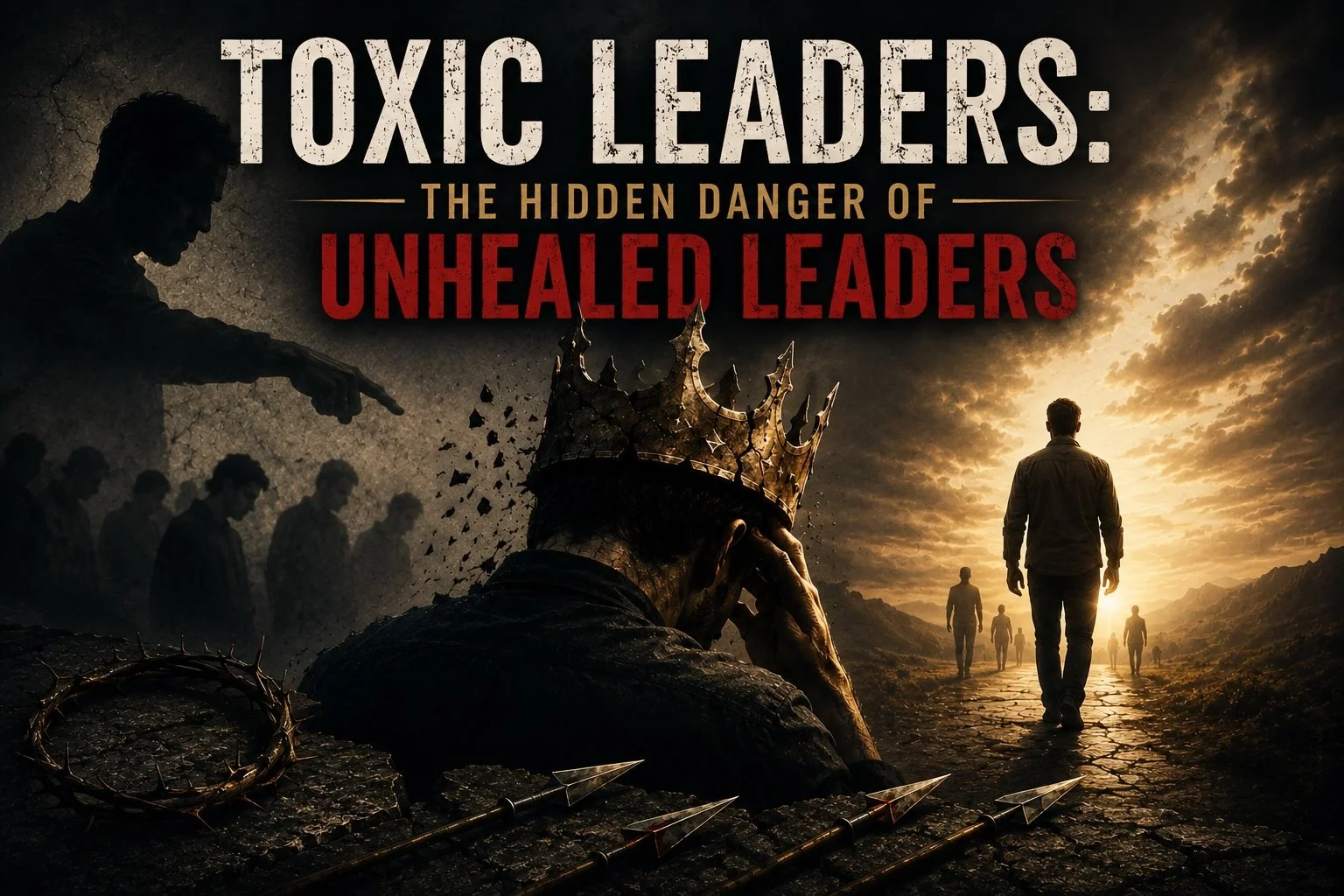
The Bible gives us a vivid example in King Saul. Saul began with God’s calling, God’s anointing, and God’s purpose. Yet the story of Saul is the story of a leader who never dealt properly with his own heart. When David was praised, Saul became jealous. When Saul felt threatened, he threw spears. When Saul lost sight of God, he hunted enemies instead of fulfilling his mission. When Saul could no longer hear from God, he turned to worldly solutions. The tragedy of Saul is not merely that he was wounded.
The tragedy is that he never sought healing. Many leaders today stand at the same crossroads. A wounded leader often leaves clues. They cannot be questioned. They demand loyalty to themselves. They isolate people. They blame others. They refuse accountability. They elevate their image above the well-being of the people they lead.
What they need is not a better strategy. What they need is healing. Every leader should ask:
Am I becoming harder to approach?
Am I becoming easier to offend?
Am I becoming jealous of the success of others?
Am I protecting my reputation more than I am protecting people?
Am I throwing modern-day spears through my words, my attitudes, or my actions?
The good news is that wounds do not have to define a leader. God used Saul to show us what happens when wounds go untreated. God used David to show us what happens when a leader continually returns to God. Healthy leaders are not leaders without wounds. Healthy leaders are leaders who bring their wounds to the Great Physician.
The future of your family, your ministry, your church, and your leadership may depend on one simple decision:
Will you hide your wounds?
Or will you heal them?
The Audio File below is of the fifty-minute workshop given to educators at an AACS conference.
The speaking notes are here